
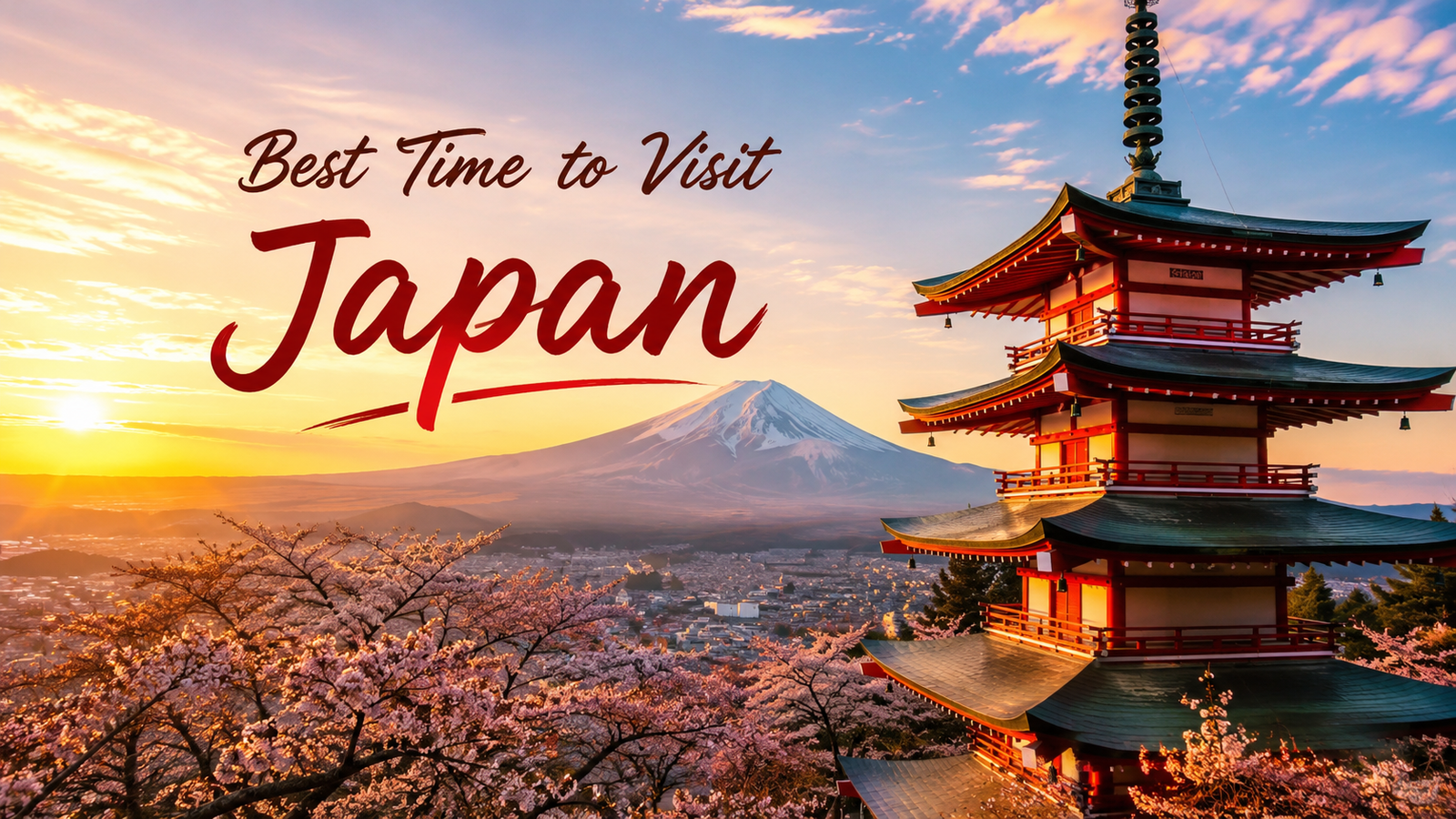
Our world is a very unique and interesting place to visit in Japan with the best time to visit Japan. The country has ancient temples, magnificent gardens, vibrant cities, and mountains all waiting to be explored. But the best part of traveling is choosing the right time to travel. In Japan, it makes a huge difference!
Japan is a country with four seasons, each full of their unique charm. Some travelers come to see the iconic cherry blossoms, while others arrive for stunning fall foliage, winter snow, or lively summer festivals.
This guide covers weather, seasonal attractions, festivals, and travel conditions all year round to help you determine when is the best time for you to visit Japan based on your interests and budget.
Why Timing Matters When Visiting Japan
The climate of Japan is very seasonal. The weather is different in the north than to the south, due to its geographic span.
Choosing the right season helps you:
- Enjoy comfortable weather
- Experience seasonal festivals
- Avoid large tourist crowds
- Save money on flights and hotels
- Participate in seasonal activities
The best time to visit Japan depends on what you want to see and experience.
Japan Seasons at a Glance
| Season | Months | Weather | Highlights |
|---|---|---|---|
| Spring | March to May | Mild and pleasant | Cherry blossoms |
| Summer | June to August | Warm and humid | Festivals and beaches |
| Autumn | September to November | Cool and comfortable | Fall foliage |
| Winter | December to February | Cold and snowy | Skiing and snow festivals |
Spring in Japan (March to May)
For many travelers, spring is considered the best time to visit Japan. During this season, the weather is pleasant, flowers bloom across the country, and the famous cherry blossom season attracts visitors from around the world.
Weather in Spring
Temperatures generally range between 10°C and 22°C depending on the location and month.
Cherry Blossom Season
Cherry blossoms, also known as Sakura, are one of Japan’s most iconic attractions. The blooming period usually starts in southern regions during late March and moves northward through April.
Popular cherry blossom destinations include:
- Tokyo
- Kyoto
- Osaka
- Hiroshima
- Nara
Parks, riversides, and temples become covered with beautiful pink flowers, creating breathtaking scenery.
Advantages of Visiting During Spring
- Pleasant temperatures
- Beautiful landscapes
- Ideal for photography
- Outdoor activities are enjoyable
- Many cultural events
Things to Consider
- Hotel prices are higher
- Tourist attractions become crowded
- Flights may cost more during peak bloom
Summer in Japan (June to August)
Summer is a lively season filled with festivals, fireworks, and outdoor adventures. Although temperatures can be high, it remains a popular time for travelers.
Weather in Summer
Temperatures often range between 25°C and 35°C.
June marks the beginning of the rainy season in many regions. July and August are generally hot and humid.
Summer Festivals
Japan hosts numerous festivals during summer, including:
- Gion Matsuri in Kyoto
- Tenjin Matsuri in Osaka
- Nebuta Festival in Aomori
- Fireworks festivals across the country
These celebrations showcase traditional Japanese culture through parades, music, and performances.
Mount Fuji Climbing Season
Summer is the official climbing season for Mount Fuji. Thousands of visitors hike Japan’s highest mountain between July and early September.
Advantages of Summer Travel
- Vibrant festivals
- Fireworks displays
- Beach activities
- Mountain hiking opportunities
- Longer daylight hours
Challenges
- High humidity
- Hot temperatures
- Rain during early summer
- Crowded tourist spots
Autumn in Japan (September to November)
Many experienced travelers believe autumn is the best time to visit Japan because of its comfortable weather and stunning fall colors.
Weather in Autumn
Temperatures generally range from 12°C to 25°C.
Humidity decreases significantly after summer, making outdoor sightseeing much more enjoyable.
Autumn Foliage
During autumn, trees across Japan turn brilliant shades of red, orange, and yellow.
Popular locations for autumn leaves include:
- Kyoto temples
- Nikko National Park
- Hakone
- Mount Takao
- Hokkaido
The scenery is particularly beautiful from late October through November.
Benefits of Autumn Travel
- Comfortable weather
- Fewer crowds than spring
- Beautiful landscapes
- Great photography opportunities
- Excellent hiking conditions
Popular Activities
- Temple visits
- Nature walks
- Cultural exploration
- Scenic train journeys
- Food festivals
Winter in Japan (December to February)
Winter offers a completely different side of Japan. Snow-covered landscapes, winter festivals, and world-class ski resorts attract visitors from around the globe.
Weather in Winter
Temperatures vary widely:
| Region | Average Temperature |
|---|---|
| Hokkaido | -10°C to 5°C |
| Tokyo | 2°C to 12°C |
| Kyoto | 1°C to 10°C |
| Osaka | 3°C to 11°C |
Skiing and Snowboarding
Japan is famous for its high-quality powder snow.
Popular ski destinations include:
- Niseko
- Hakuba
- Furano
- Nozawa Onsen
Snow Festivals
One of the most famous winter events is the Sapporo Snow Festival, featuring incredible snow and ice sculptures.
Advantages of Winter Travel
- Snow activities
- Lower tourist numbers
- Unique winter scenery
- Hot spring experiences
- Budget-friendly options
Things to Keep in Mind
- Cold temperatures
- Snow may affect transportation
- Some attractions have shorter hours
Month-by-Month Guide
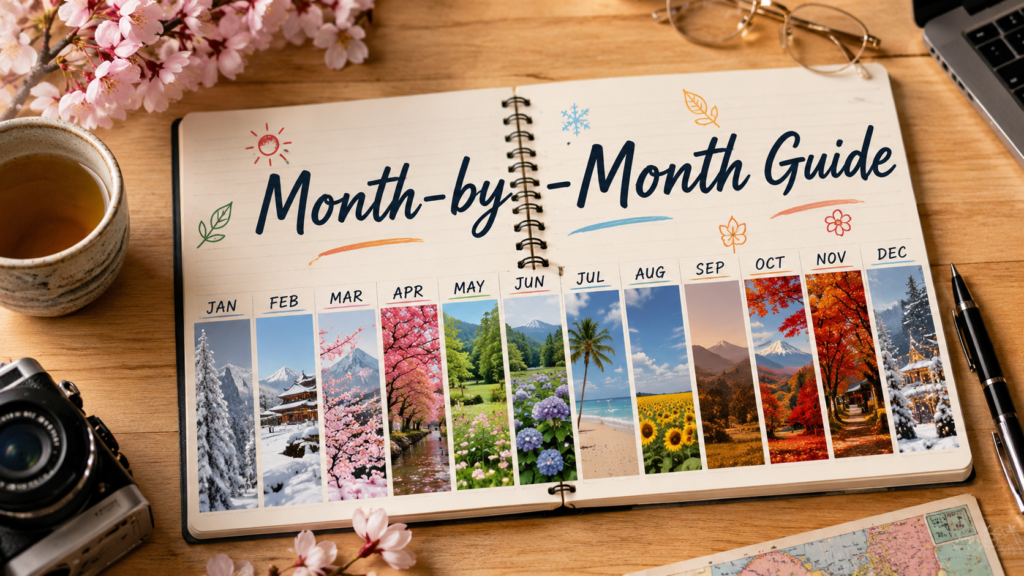
January
- Snow season peaks
- Great for skiing
- Winter festivals begin
February
- Excellent snow conditions
- Sapporo Snow Festival
- Fewer tourists
March
- Spring starts arriving
- Early cherry blossoms in southern Japan
April
- Peak cherry blossom season
- One of the most beautiful months
May
- Pleasant weather
- Green landscapes
- Comfortable sightseeing
June
- Rainy season begins
- Fewer tourists
July
- Festival season starts
- Mount Fuji climbing season opens
August
- Fireworks festivals
- Summer vacations
- Warm temperatures
September
- End of summer heat
- Early autumn colors in northern areas
October
- Comfortable temperatures
- Beautiful scenery
November
- Peak autumn foliage
- Ideal for photography
December
- Winter begins
- Christmas illuminations
- Ski season starts
Best Time to Visit Japan for Different Travelers
For Cherry Blossoms
The best time to visit Japan for cherry blossoms is from late March to early April.
For Autumn Colors
October and November offer spectacular autumn scenery.
For Budget Travelers
January, February, and June often provide lower accommodation costs.
For Ski Enthusiasts
December through February is ideal for winter sports.
For Festivals
July and August feature many of Japan’s most famous festivals.
For Comfortable Weather
Spring and autumn provide the most pleasant conditions.
Major Festivals Throughout the Year
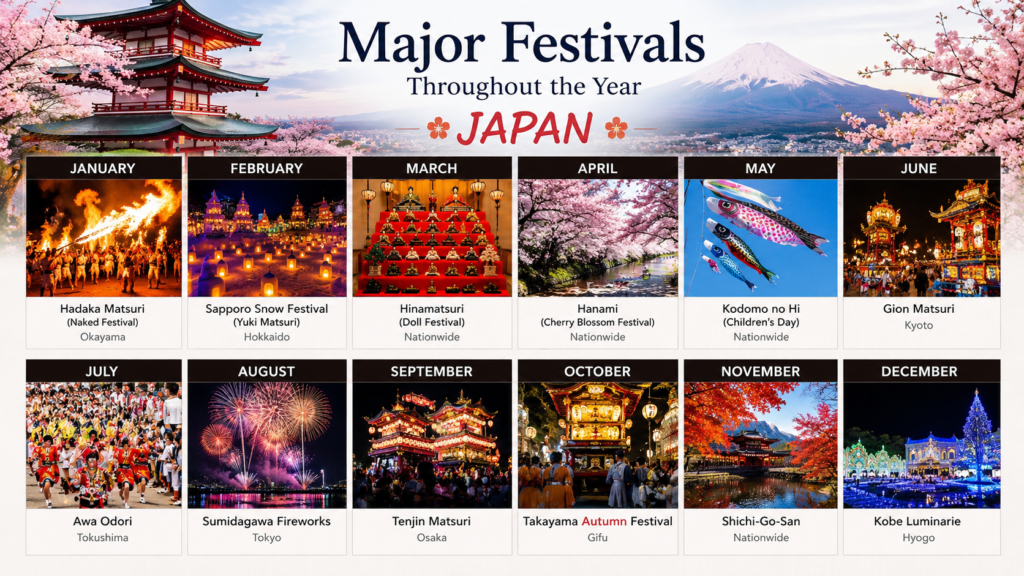
| Festival | Month | Location |
|---|---|---|
| Sapporo Snow Festival | February | Sapporo |
| Cherry Blossom Festivals | March-April | Nationwide |
| Gion Matsuri | July | Kyoto |
| Tenjin Matsuri | July | Osaka |
| Nebuta Festival | August | Aomori |
| Autumn Festivals | October-November | Various Regions |
Travel Tips for Visiting Japan
Book Early During Peak Seasons
Accommodation fills quickly during cherry blossom and autumn foliage seasons.
Carry Cash
Although card acceptance is increasing, some smaller establishments still prefer cash.
Use Public Transportation
Japan’s train network is efficient and convenient for travelers.
Check Regional Weather
Weather conditions can vary significantly between northern and southern Japan.
Pack According to Season
Bring appropriate clothing based on the time of year and destinations you plan to visit.
Is Spring or Autumn Better?
Both seasons are excellent choices.
Spring offers:
- Cherry blossoms
- Mild weather
- Famous seasonal scenery
Autumn offers:
- Colorful foliage
- Comfortable temperatures
- Slightly fewer crowds
If your goal is seeing Sakura, spring is the clear winner. If you prefer comfortable sightseeing conditions and colorful landscapes, autumn may be a better option.
Conclusion
The optimal time is in accordance to her interests, budget for the trip and the activities she wishes to indulge in. Kyoto’s world-famous cherry blossoms in spring and the stunning foliage and pleasant weather in autumn entice many an international traveler. There are great summer festivals and activities outdoors; there are ski slopes, snow festivals, and pretty snowy vistas in the winter.
March to May and September to November are the optimal travel windows for most visitors. These seasons amalgamate good outdoors, beautiful nature, and wonderful exploration time. Japan always offers unforgettable experiences, fascinating culture, delicious food and stunning landscapes at any time of the year.
FAQs About Best Time to Visit Japan
1. What is the best time to visit Japan for first-time travelers?
Answer: Spring and autumn are generally considered the best seasons because of comfortable weather and beautiful scenery.
2. Which month is cheapest to visit Japan?
Answer: January, February, and June are often among the most affordable months for travel.
3. When can I see cherry blossoms in Japan?
Answer: Cherry blossoms usually bloom between late March and early April, depending on the region.
4. Is Japan worth visiting in winter?
Answer: Yes. Winter offers excellent skiing, snow festivals, hot springs, and fewer crowds.
5. What is the rainy season in Japan?
Answer: The rainy season typically occurs between June and mid-July in many parts of the country.
6. How many days are enough for Japan?
Answer: A trip of 10 to 14 days allows travelers to explore major cities and cultural attractions comfortably.
For more upcoming updates about Hotels, Trains, Cruise, Flights, Destinations, Holidays Plans & Tour Packages explore our NextDesti for all.






Leave a Reply